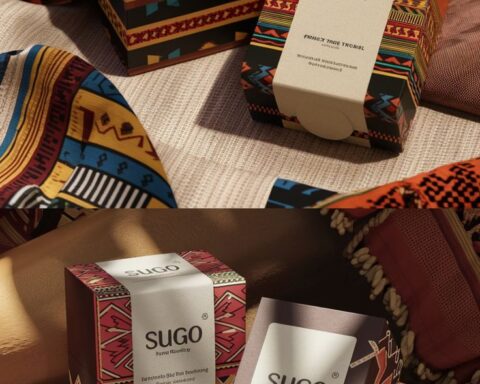


Across the continent, African product designers are redefining what innovation looks like. Instead of chasing flashy, futuristic concepts, they build solutions rooted in empathy, lived experience, and context. Their innovations are practical, culturally intelligent, and astonishingly resourceful—proof that world-class design does not depend on lavish budgets or high-tech labs, but on deep understanding of how people actually live.

Designing Under Constraint: A Creative Advantage
African designers typically work within systems marked by unstable power supply, high material costs, unpredictable logistics, and limited manufacturing infrastructure. But these constraints have become creative catalysts.
Whether it’s turning discarded materials into prototypes, harnessing local craft traditions, or re-engineering everyday tools for improved efficiency, these designers practice a form of “constraint-driven innovation.” The challenge is never just to make something work—it is to make it work reliably, affordably, and sustainably in environments where failure can carry real consequences.
This mindset produces solutions that are frugal yet robust, simple yet ingenious, and always grounded in cultural reality.
Pioneers of Practical Innovation
Across Africa, several designers and innovators exemplify this approach:

William Kamkwamba (Malawi)
Celebrated for building a functioning windmill from scrap parts at age 14, Kamkwamba’s invention powered his family’s home and pumped water during Malawi’s drought. His story became a global symbol of ingenuity—and proof that innovation thrives outside elite institutions. His work highlights how necessity and observation can drive powerful engineering breakthroughs.

Mukuru Clean Stoves (Kenya)
Founded by Ncuti Nyanjira and popularized by regional distributors, Mukuru Clean Stoves produce low-emission cooking systems that reduce indoor air pollution—a leading cause of health issues in low-income communities. Their stoves use recycled metal and burn fuel more efficiently, saving families money and protecting the environment. This is product design saving lives at scale.

Jehiel Oliver (Kenya/Nigeria - Hello Tractor)
The founder of Hello Tractor, which is often described as an "Uber for tractors". This agritech solution uses a digital marketplace and IoT technology to connect smallholder farmers with tractor owners, providing affordable and timely access to essential machinery and reducing labor.

Sara Menker (Ethiopia - Gro Intelligence)
As the Founder and CEO of Gro Intelligence, Menker has developed a tech company that uses artificial intelligence to forecast agricultural trends. Her work helps illuminate the relationships between the earth's ecology and the economy, providing vital data for better decision-making in agriculture.

Arthur Zang (Cardiopad)
This Cameroonian engineer developed the Cardiopad, a portable, touchscreen medical tablet designed to perform heart diagnostics, such as an electrocardiogram (ECG), in remote areas. The device transmits test results wirelessly to specialists, bridging the gap in healthcare access and saving lives where cardiologists are scarce.
Design Rooted in Real Life
What distinguishes African product design is not just the creativity—it is the connection to people.
These designers begin their process in homes, farms, markets, schools, urban settlements, and remote villages. They observe how families cook, how farmers irrigate, how students learn, how traders move goods, and how communities adapt to scarcity. This immersion results in products that reflect how people actually live:
- Durable: built to withstand harsh environments
- Intuitive: simple enough for non-technical users
- Culturally fitting: designed around local habits, not imported assumptions
- Repairable: easy to maintain with locally available parts
- Affordable: priced for real accessibility
In this way, African design challenges the traditional Western model that often prioritizes aesthetics, novelty, or luxury over practicality. Here, design is not a luxury—it is survival, dignity, and empowerment.
What distinguishes African product design is not just the creativity—it is the connection to people.
These designers begin their process in homes, farms, markets, schools, urban settlements, and remote villages. They observe how families cook, how farmers irrigate, how students learn, how traders move goods, and how communities adapt to scarcity. This immersion results in products that reflect how people actually live:
- Durable: built to withstand harsh environments
- Intuitive: simple enough for non-technical users
- Culturally fitting: designed around local habits, not imported assumptions
- Repairable: easy to maintain with locally available parts
- Affordable: priced for real accessibility
In this way, African design challenges the traditional Western model that often prioritizes aesthetics, novelty, or luxury over practicality. Here, design is not a luxury—it is survival, dignity, and empowerment.

Innovation Without the Gloss
One of the greatest myths innovation is that it requires advanced labs, expensive machines, and teams of specialists. African designers prove the opposite:
High-impact design comes from clarity—knowing what problem you are solving and why.
A cardboard prototype, a welded metal frame, or a scavenged motor can become a transformative technology. Many innovators begin with community workshops, roadside mechanics, fabricators, and informal markets. These spaces are the true laboratories of African creativity.
This design culture fosters:
- Resourcefulness: using what’s available, not what’s ideal
- Rapid iteration: testing quickly with real users
- Cross-disciplinary collaboration: mixing engineering with craft, farming, or local manufacturing
- Human-centered outcomes: solutions shaped by people’s lived realities
It is no surprise that global innovation experts increasingly look to Africa for lessons in frugal design and sustainable product development. In a world facing climate instability, economic inequality, and resource scarcity, Africa’s design solutions offer a blueprint for the future of innovation.